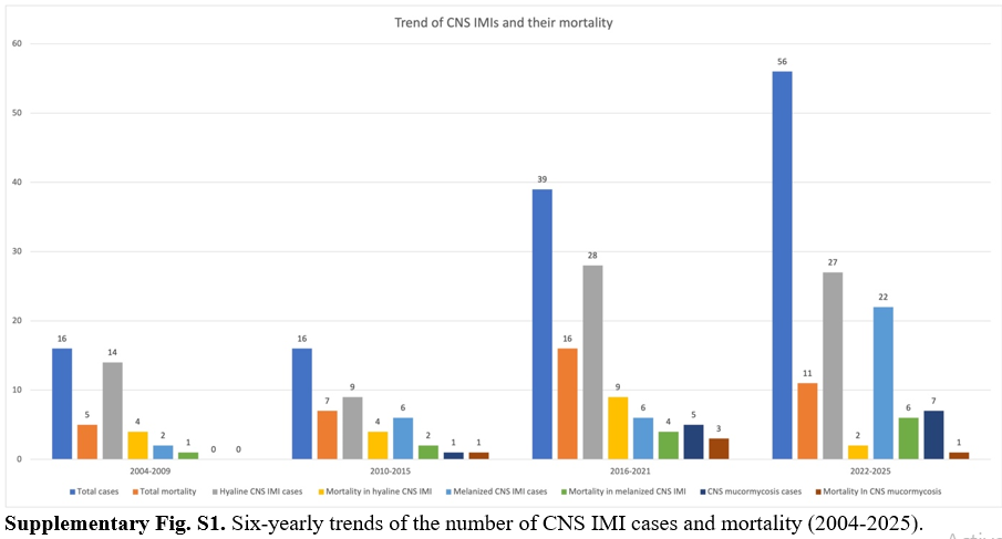
An Indian cohort study conducted by Kaur and colleagues documented a rising incidence of invasive mould infections amongst patients with brain abscess. Compared with the index study, which reported an incidence of 9.6%, previous studies by Lakshmi et al and Kruthika et al had documented an incidence of 1.0% and 1.7%, respectively, over 24–38 years.
Most cases (74%) were immunocompetent. The remainder (26%) were immunocompromised and had identifiable risk factors, such as steroid use, immunosuppressant use, malignancy, uncontrolled diabetes mellitus, kidney disease, renal transplant, and liver disease. Twenty-seven children were included, 55.6% with no recognised underlying disorder.
The predominant clinical features included headache (61.4%), seizures (50.4%), fever (44.1%), altered sensorium (37.8%), vomiting (29.1%) and hemiparesis (n = 24.4%). The frontal lobe (61.4%) was the most involved. Aspergillus species, especially A. flavus (39.8%), was the most common species isolated, followed by Cladophialophora bantiana (21.36%). A new human melanised pathogen, Deniquelata barringtoniae was described in one case.
The overall mortality was 30.7% despite antifungal therapy and attempts at surgical excision, which were complete in 55.9%.
The study highlights the rising burden of CNS IMIs in LMICs, particularly affecting young immunocompetent individuals, likely due to environmental exposure and potentially influenced by climate change and fungal adaptation. The high mortality rates emphasise the need for early clinical suspicion, accurate diagnostic strategies, and combined surgical and antifungal treatment.