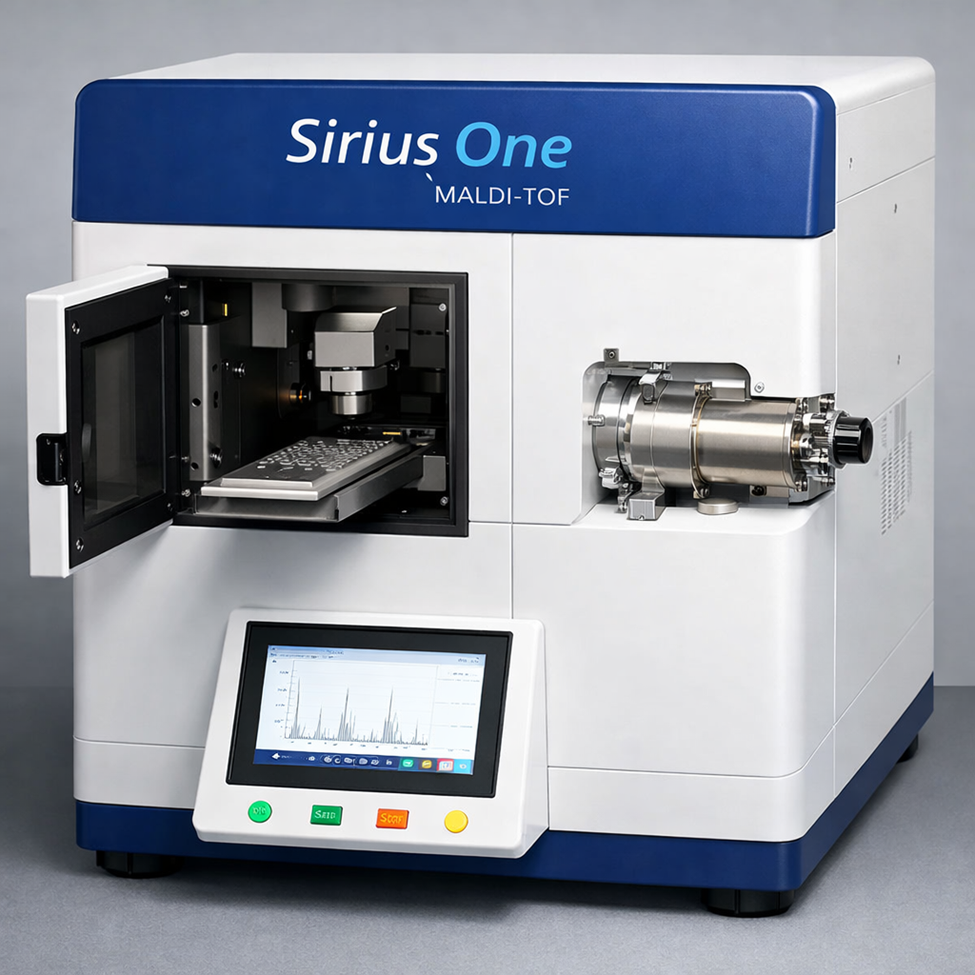
Although advances in Matrix Assisted Laser Desorption/Ionisation Time-of-Flight (MALDI-TOF) Mass Spectrometry technology have enabled higher accuracy and faster identification of moulds, the model of instruments and databases used, and the extraction method, are crucial for optimal diagnostic outcomes.
In this Swedish study, the Sirius One system showed higher sensitivity than the Microflex 3.1, achieving a 92.6% correct identification rate for moulds with the Mass Spectrometry Identification (MSI)-2 database, compared with 70.6% for Microflex (p < 0.01). In contrast, the identification rates were lower when using the manufacturer-provided databases: 51.5% for Sirius One and 41.2% for Microflex.
Regarding extraction methods, the on-plate extraction method performed comparably to the in-tube method, achieving 94.1% accuracy with Sirius One and the MSI-2 database. In addition, the on-plate method required only 10 minutes per sample compared to approximately 45 minutes for the in-tube method, implying an advantage of a shorter turnaround time.
Although the MSI system outperformed Bruker’s manufacturer library in identification to species level, it was associated with a higher number of misidentifications. The initiation of appropriate antifungal treatment could be delayed in such scenarios, leading to preventable devastating outcomes. Thus, authors opined that results from the MSI-2 database must be interpreted in conjunction with other microbiological data, such as microscopy and macroscopic appearance.
Besides the Sirius One and Microflex 3.1 systems evaluated in this index study, other MALDI-TOF systems utilised for the identification of fungal pathogens include VITEK MS (bioMérieux), ASTA MicroIDSys (ASTA Inc.), Autof MS 1000 (Autobio Diagnostics) and Shimadzu MALDI-TOF systems (Shimadzu Corporation). More details on fungal detection using MALDI-TOF are available on the LIFE MALDI-TOF page.