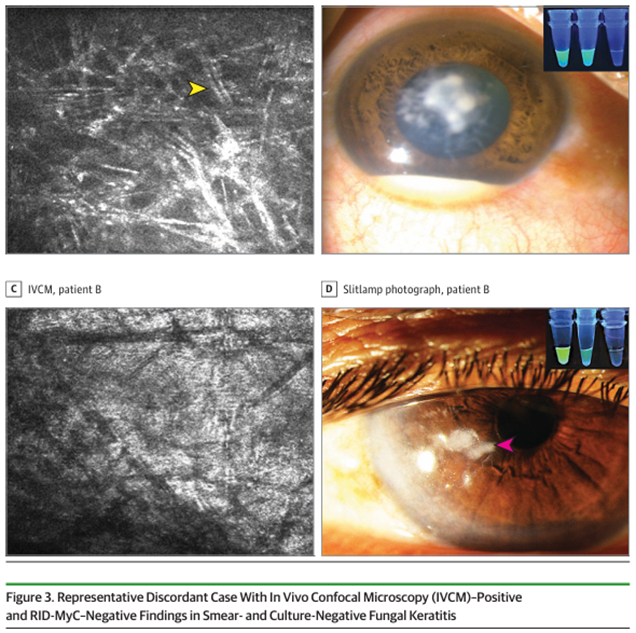

A new rapid molecular tool for diagnosing fungal keratitis has been developed by Aravind Eye Hospital in India – RID-MyC. Negative fungal cultures and microscopy are a frequent problem in fungal keratitis worldwide, leading to an underestimate of its true burden. A PCR assay has been further improved using CRISPR methodology (ST-RID-MyC) and takes <10 minutes to do.
The initial work with the ST-RID-MyC assay found a sensitivity of 90% and a specificity of 90.48% in suspected microbial keratitis. This high performance is affirmed by findings from a prospective study of smear and culture-negative cases of fungal keratitis, conducted at the Aravind Eye Hospital, Coimbatore, India: rapid identification of mycoses using ST-RID-MyC demonstrated a sensitivity of 82.1% and specificity of 76.9% compared with the in vivo confocal microscopy (IVCM) standard. Positive predictive value was 88.5% while negative predictive value was 66.7%. Concordance between RID-MyC and IVC was observed in 80.5% of the cases.
The results of this index study continue to affirm the complementary value of molecular tools in diagnosing fungal infections. IVCM is not readily available in many places, and in one-third of patients, it is not feasible, probably due to poor patient cooperation or clinical contraindications. In addition, the short turnaround time of ST-RID-MyC compared with cultures is vital for the prompt initiation of appropriate antifungal therapy and invariably improves treatment outcomes. Conclusively, the authors suggest the use of RID-MyC as an adjuvant, especially when conventional methods fail.