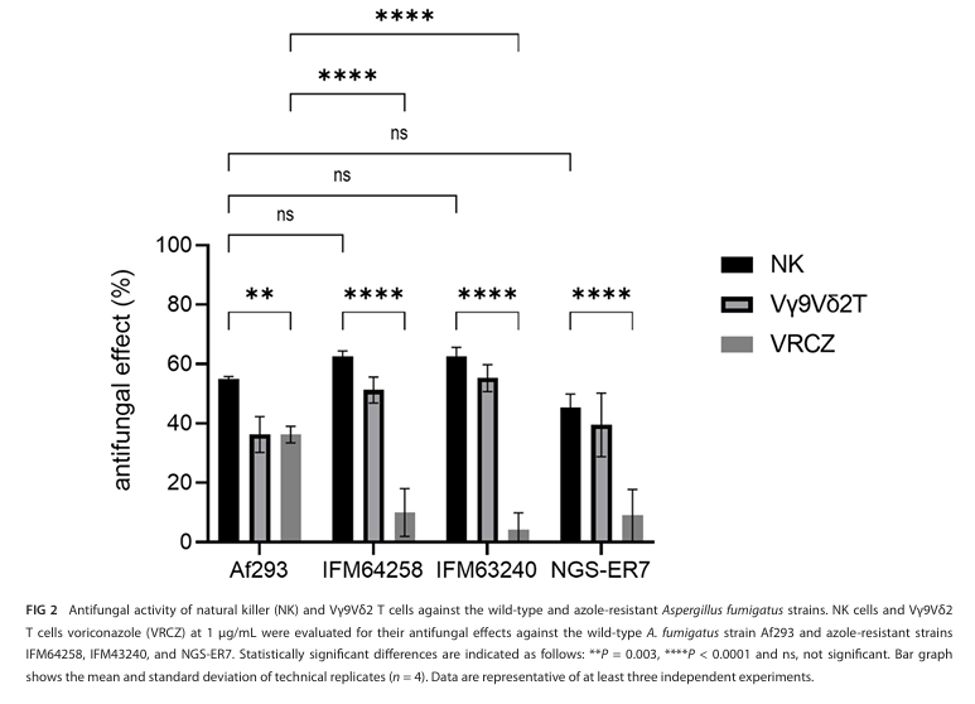
A new study by Namie and colleagues showed that IL-2/IL-18-expanded NK cells exert significant antifungal activity against a broad spectrum of filamentous fungi, including Aspergillus fumigatus, Rhizopus oryzae, Mucor species and azole-resistant Aspergillus fumigatus. Namie et al examined the antifungal activity of vitro-expanded human NK cells against filamentous fungi and explored the mechanisms underlying NK cell-mediated antifungal effects.
The findings from this study suggest that direct contact between NK cells and fungal hyphae is essential for antifungal efficacy and degranulation as the key underlying mechanism, contrary to findings from previous reports by Bouzani et al and El-khoury et al, which implicated IFN-γ as the main mediator of NK cell antifungal activity. Authors of the index study attributed these discrepancies to differences in NK cell stimulation protocols and assay conditions.
In the face of the prevalent azole resistance in Aspergillus fumigatus and adverse events posed by the current antifungals (Fengler et al and Lackner et al), the development of novel therapies for invasive aspergillosis is needed. Cellular immunotherapy using IL-2/IL-18-expanded NK cells represents a promising therapeutic approach for patients with aspergillosis caused by azole-resistant strains or in whom conventional antifungal agents fail to achieve satisfactory outcomes.